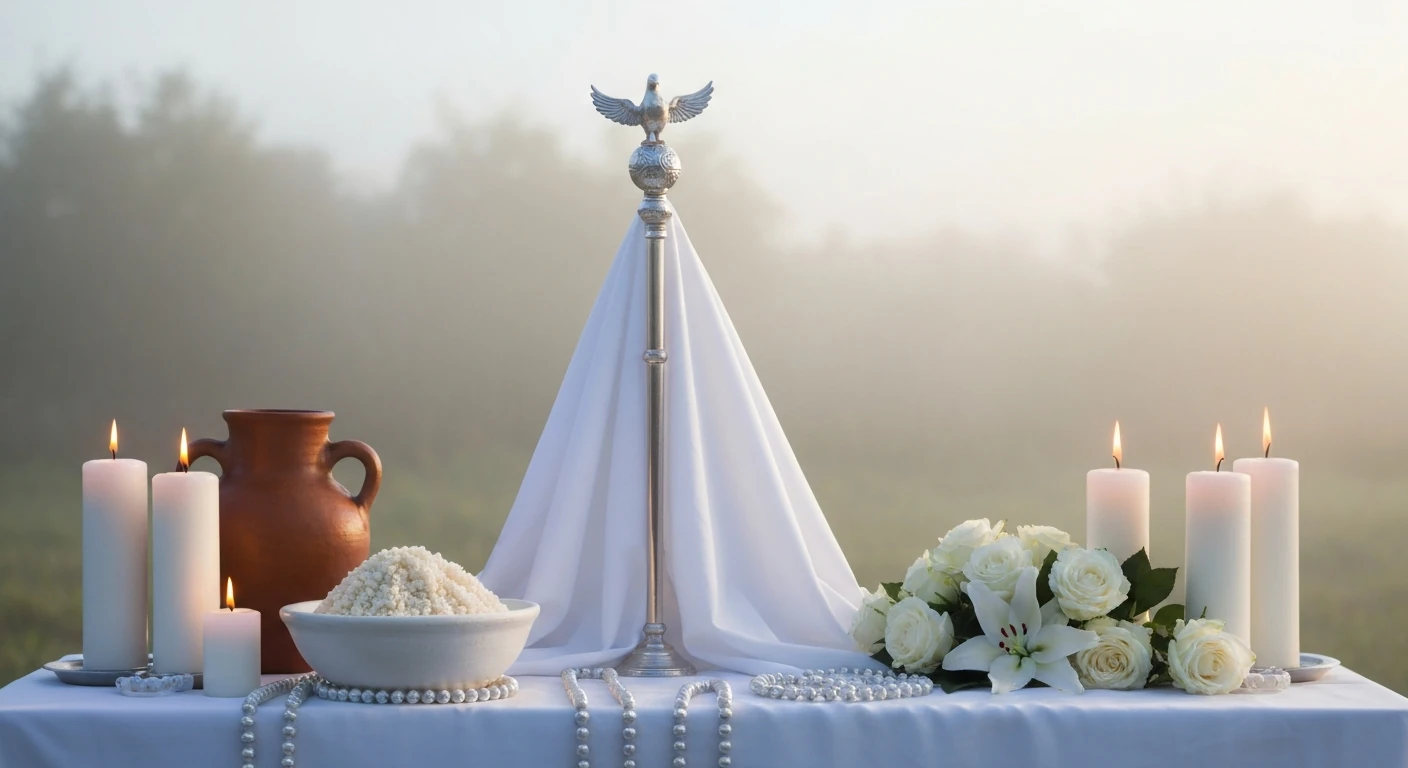
You must have already heard of the Oxalá carpet and perhaps you do not even know that it is a very well known herb: boldo. In Umbanda and Candomblé, the broad and velvety leaf of the garden boldo is one of the most beloved plants of the great father. The name is a beautiful image: the soft and white carpet that Oxalá spreads on the ground to open a clean path for his children.
In this guide, you will understand which boldo is the Oxalá carpet, why it is the leaf of this orixá (orisha), what it is used for, how to perform the cleansing ritual bath step by step, and what precautions to take with the herb.
Which herb is the Oxalá carpet
The Oxalá carpet is the garden boldo, also called false boldo or holy mallow. The botanical name is Plectranthus barbatus (previously classified as Coleus barbatus), from the Lamiaceae family, the same as rosemary, mint, and lavender. It is a shrub with large, light green leaves covered by a light fuzz, which gives it the soft touch of a "carpet".
Here is an important precaution. There are several different "boldos", and not all are the same plant. The tapete de Oxalá is the garden boldo with broad and velvety leaves, common in Brazilian backyards. Do not confuse it with the Chilean boldo (Peumus boldus), which is another species, from another family, sold dry in industrial tea. For ritual use, the leaf mentioned in the terreiros is the garden boldo.
Êpa Babá! It is the greeting to Oxalá, the orixá of peace, creation, and the white color. All ritual work with the Oxalá carpet is done in his name, with calm and reverence.
Why is boldo the leaf of Oxalá
In Umbanda, boldo is a white herb of Oxalá, alongside companions like rosemary and lavender. The soft and light leaf combines with the energy of peace and whiteness of the orixá. That is why it has the affectionate nickname tapete de Oxalá: the plant that carpets the path of those seeking serenity. The day dedicated to this ritual work is usually Friday, consecrated to Oxalá.
In Candomblé, especially in the Ketu nation, boldo is a leaf of Oxalá and of the funfun orixás, the white orixás. Its name in Yoruba is ewé bàbá, which means "father's leaf" or "old man's leaf". It enters the abô, the ritual leaf water used to wash assentamentos (consecrated foundations), bead necklaces, and the heads of initiates. If you want to know more about the ruling orixá, see our guide on who is Oxalá.
Some Umbanda houses also associate boldo with the strength of Ogum (Ogun) and Xangô (Shango). It is a secondary and less widespread reading, so treat it as a custom of certain houses, not as a general rule. The central and consensual association is with Oxalá.
What is tapete de Oxalá for
The most sought after use is the cleansing and peace ritual bath. Houses describe tapete de Oxalá as a gentle spiritual cleansing leaf, which helps release the weight of the day, dense energies, and distress. It is not a strong spiritual cleansing like that of rue or guinea hen weed, but rather a gentler cleansing, which calms and returns the person to their center.
Besides the ritual bath, the herb has other traditional uses:
- Smoke cleansing (defumação): the dried leaves burned to purify the house and ward off heavy charges from the rooms.
- Washing of bead necklaces and assentamentos: the juice of the leaves used to clean bead necklaces and objects of Oxalá, always within the fundamento of the house.
- Amaci: the preparation of leaves applied to the crown to strengthen mediumship, done only with the guidance of the leader.
- Living plant in the home: the boldo pot at home as a presence of peace and of Oxalá.
To complement the cleansing of the environment, it is also worth reading about smoke cleansing (defumação) for spiritual cleansing (descarrego).
How to do the tapete de Oxalá (boldo) ritual bath
The Oxalá carpet ritual bath is simple and delicate, as requested by the energy of the orixá. The best day is Friday, preferably at night.
What you will need
- A good handful of garden boldo leaves, fresh or dry
- 1 to 2 liters of water
- 1 white candle (optional)
Preparation
- Boil the water and turn off the heat as soon as it reaches a boil.
- Add the leaves and cover the pot. Let it infuse for about 15 minutes. You can also macerate the leaves in the water with your hands, without boiling.
- Strain the liquid and let it cool until it reaches a pleasant temperature.
How to take
- First take your normal hygiene bath, with soap.
- If you wish, light the white candle and ask for the peace of Oxalá with your own words.
- Pour the ritual bath from the neck down, slowly, visualizing the cleansing and serenity entering.
- Do not rinse. Let it dry naturally and wear light-colored clothes.
- Discard the leaves in nature, with a word of thanks.
If this is your first contact with herb ritual baths, the seven herbs ritual bath guide helps you understand the general logic.
Care with boldo
The Oxalá carpet is a friendly herb, but it deserves some serious care, especially because boldo is also used as a home remedy.
- Do not drink the ritual bath water. The ritual bath is for external use. Boldo tea is something else, a medicinal use separate from the ritual.
- Pregnancy and breastfeeding: boldo is contraindicated for pregnant and lactating women for internal use, as it can stimulate contractions. If in doubt, talk to your doctor.
- Occasional internal use: as a digestive tea, boldo should be used for a few days. In excess, it can irritate the stomach. It does not replace medical supervision.
- Do not pour on the head on your own. The amaci and the crown ritual bath are terreiro foundations. Only do this with the guidance of your spiritual leader.
With these precautions, the herb fulfills its role well as a leaf of peace.
Frequently asked questions
Which herb is the Oxalá carpet?
Tapete de Oxalá is boldo, more precisely garden boldo or false boldo (Plectranthus barbatus), with broad and velvety leaves. It is different from Chilean boldo, which is another plant, sold dry for tea. In terreiros, the leaf used is from the garden boldo.
What is the boldo ritual bath for?
In the spiritual plane, the boldo ritual bath serves for a gentle cleansing: releasing the weight of the day, pushing away dense energies, and bringing peace and clarity. It is a milder descarrego, linked to Oxalá. It does not promise to solve problems, but rather to help calm and open a path.
Are Boldo and Oxalá's carpet the same thing?
Yes. "Oxalá's carpet" and "Oxalá's leaf" are ritual names for garden boldo in umbanda and Candomblé. In the ketu nation Candomblé, the leaf is called ewé bàbá in Yoruba. The name changes, but the plant is the same.
What is the best day for the Oxalá bath with boldo?
Friday is the day consecrated to Oxalá in umbanda, so it is usually the preferred choice, preferably at night. Even so, in a moment of need, the bath can be done on another day. What matters is the intention and respect for the ritual.
Can I pour the boldo ritual bath on my head?
Not on your own. Pouring on the head touches the crown, which is a terreiro foundation and requires guidance from the spiritual leader. The home cleansing ritual bath is poured from the neck down. For crown ritual work or amaci, seek out your house of axé.
Where to buy Oxalá's carpet
If you want to prepare your bath of peace, contact Joia Mística Laroyê on WhatsApp and find:
- Dry Boldo (Oxalá's carpet): in small packets, ready for ritual bath and smoke cleansing (defumação)
- White candles of Oxalá: to light in praise of the greatest father
- White herbs for a peace ritual bath: rosemary, lavender and others from the table of Oxalá
- Smokers and cleansing incense: to purify the environment
- White bead necklaces and beads: to compose your axé with care
Also discover other white herbs, such as eucalyptus and colônia. Visit our shop in Extrema, Minas Gerais or contact us via WhatsApp with delivery to all of Brazil.
Sources: Plectranthus barbatus (Wikipedia) and Garden boldo (Botanical Garden, USP).
References
- Wikipedia: Plectranthus barbatus, encyclopedic entry on garden boldo
- Botanical Garden, USP Ribeirão Preto: Garden boldo (Plectranthus barbatus), species sheet