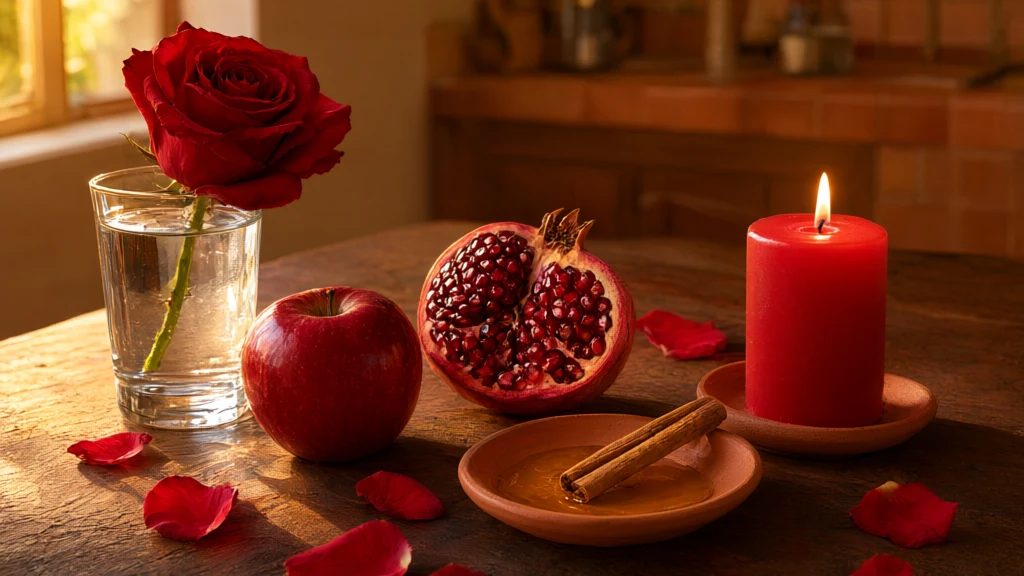
The classic folk charm for love is that of Saint Anthony, the matchmaker saint: the statue of the saint upside down in a glass with water until a love arrives. Also circulating are the red rose ritual bath, the saucer of honey with cinnamon, the apple with honey, and the pomegranate. Each one asks for something: to attract a love, to sweeten the relationship, or to consecrate the union.
Below is the step by step for each one, where the custom comes from, and the limit that no folk charm crosses: the will of the other person.
The 6 folk charms for love, step by step
The recipes below are the versions published in newspapers. They change from family to family.
To attract: Saint Anthony, rose, pomegranate, cinnamon | To sweeten: honey | For the couple that wants to marry: apple with honey
1. Saint Anthony upside down in the glass
- Place the statue of Saint Anthony upside down in a glass with water (some use cachaça).
- While turning the saint, visualize the prayer request for a love.
- Leave the statue in the glass until the prayer request is granted.
The newspaper A Tarde records the same folk charm with the statue submerged upside down in water until the prayer request is granted.
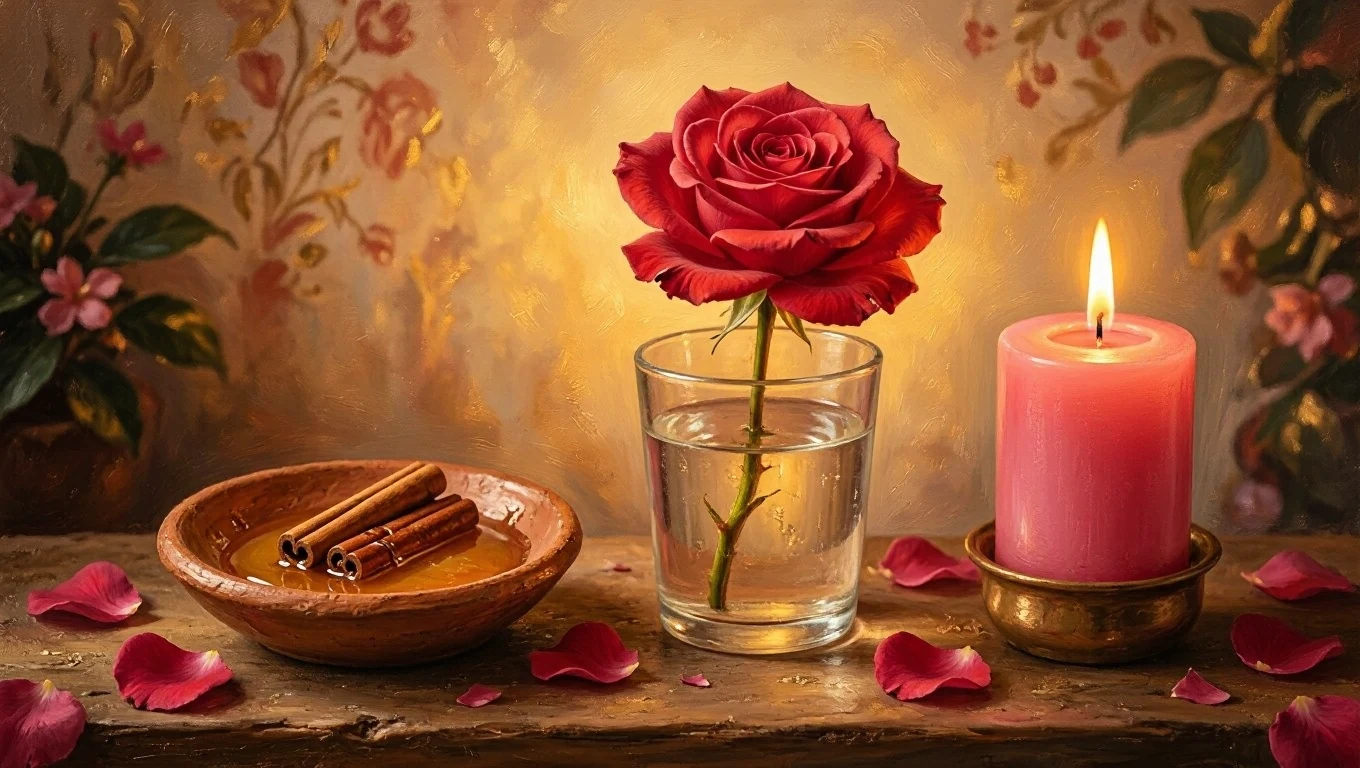
2. Red rose ritual bath with salt
- In a glass with water, put three pinches of salt and one red rose.
- Leave the rose there for two days.
- Afterwards, take a ritual bath with this water from the neck down, repeating the phrase below.
- The rose goes in the trash.
Saint Anthony, send an Anthony to me.
Those who do not expect an Anthony can replace it with "send a love to me": the prayer request is for a love, not for a specific person. To choose another ritual bath for the moment you are living, the which ritual bath to take test indicates yours.
3. Saucer of honey and cinnamon with a red candle
- Write your name in pencil on a red piece of paper.
- Put the paper on a saucer and cover it with a little honey and cinnamon.
- Light a red candle over the saucer and watch the flame for 10 minutes, visualizing the love you want to attract.
- Stay nearby until the candle burns out, on a firm saucer and away from curtains, as in the guide on how to light a 7-day candle.
The version that circulates asks for the name of the loved one and a phrase for them to "be enchanted." Here, it is your name: the folk charm works on what you attract. Honey has a place in sweetening rituals, which, for those who perform them, calm fights and bring a softer gaze.
4. Apple with honey, for the couple that wants to marry
- Cut the top of a red apple like a lid and remove the core.
- On a white piece of paper, write your name and your boyfriend's name.
- Place the paper inside the apple, fill it with honey and put the lid back on.
- Make a prayer to Saint Anthony asking for marriage.
This is for those who are already dating and want to firm the union, with both parties in agreement. It is not for putting the name of someone who is not with you inside the apple.
5. Pomegranate of requests
The pomegranate is a "symbol of fertility, abundance, and love," and the most well-known folk charm is for Three Kings Day, with three requests. Open the pomegranate, take out three seeds and make a request with each one, and one of them can be for love. Other versions of the pomegranate, for New Year's Eve, are in the New Year's folk charms.
6. Cinnamon blown with the phrase of love
The cinnamon folk charm of the 1st also serves love, because the phrases can be adapted to the goal. In an Umbanda terreiro in Paraná, cinnamon sticks are used for love, self-esteem, and sweetness, in addition to prosperity. Keep the three verses and replace "prosperity" with "love".
Why is Saint Anthony the matchmaker saint?
Saint Anthony is the matchmaker saint due to popular devotion, and even the Catholic Church itself cannot explain the fame. A report cited by Vatican News says that he helped young women who could not marry due to a lack of dowry. Another legend tells that a wealthy young man seduced and abandoned a poor young woman, and only had luck in life when he returned to her.
The saint's day is June 13th, and it is near him that the folk charms multiply.
An anthropology study from UFAM interviewed 10 devotees in Santarém (PA). They ask for a boyfriend or husband with prayers, promises, folk charms, and even punishments. The saint goes into the freezer, stays upside down, or loses the Baby Jesus from his arms until the request is granted. In Bahia, the same saint is syncretized with Ogum (Ogun), a story told in Saint Anthony and Ogum.
Why does the folk charm ask for the person's name?
The folk charm asks for the name, the photo, or a piece of the person because it works through the logic of contact: what touched someone, or represents them, stays connected to them. A survey by UNESP in 54 cities in São Paulo, with 1,600 popular recipes, showed that folk charms follow two laws: that of similarity and that of contact.
The similarity explains the rest of the recipe. Honey is sweet, so it sweetens; the red of the rose and the candle recalls passion; the pomegranate full of seeds calls for abundance. The contact explains the name on the paper. It is precisely there that the folk charm for love finds its limit.
Does a folk charm to bring love back work?
No folk charm brings someone back against their will, not in 24 hours, nor "even today." The folk charm works on your intention and your side of the story. The other person remains free to decide.
An anthropology research from USP about love ritual work shows how the subject is controversial in the Afro-religious circle. For the people interviewed, the sweetening ritual and the union are lighter because they do not interfere with free will. Love binding ritual, however, wants the person to "fall head over heels" for whoever asked. In white magic, the rule is similar to that of Wicca: do what you want, as long as it does not harm anyone. And what is done, for good or for evil, returns three times.
Joice, tarot reader and white witch, does not do love binding ritual. Her work in love is the sweetening ritual, to calm the relationship that already exists, and the reconciliation of couples when both want it. A tarot of love reading shows if there is still a path. You can book a consultation with Joice via WhatsApp.
If the relationship that ended involved aggression or fear, the right folk charm is for protection, and the right help comes from people: family, friends, and professionals.
Which candle to light for love?
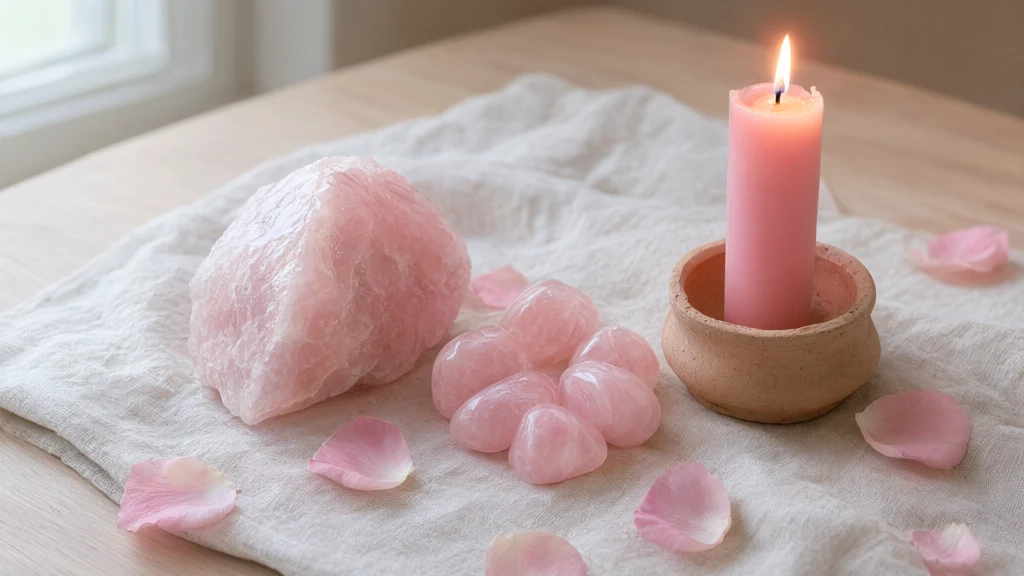
For love, the published folk charms use the red candle. In our guide to ritual candle colors, the pink candle is for romantic love, reconciliation, and the harmony of the couple. It combines with rose quartz, the stone of self-love.
Choose a single-colored candle, without mixing. Those who want to choose by intention can use the which candle to light test. The candle stays on a firm saucer, away from curtains, and is not left burning alone.
Frequently asked questions
What strong folk charm can I do to bring my love back even today?
No folk charm has a deadline or the power to change someone's will. Whoever promises a return in hours promises what no folk charm delivers. What you can do today is your part: a rose ritual bath to open up again, a pink candle for peace, and an honest conversation, if there is still room for it.
How to make him come after me today?
There is no folk charm that makes someone come after you, because the decision belongs to the other person. The love folk charm works on the one who performs it: self-esteem, openness, and calmness for the next conversation.
Is a folk charm for love the same thing as a love binding ritual (amarração)?
No. The charm to attract and the sweetening ritual work on your intention and the peace of the couple, without binding the other person. The love binding ritual (amarração) wants the other person to fall in love with the one who asked, and for that reason, it is the most controversial point of love ritual work. Joice does not do love binding rituals (amarração).
On what day to do the Saint Anthony folk charm?
The most sought-after day is June 13, Saint Anthony Day, when newspapers publish the folk charms of the matchmaker saint. The recipes for the glass with water and the rose ritual bath are not fixed to a date. Many people do them at any time of the year, when they feel it is time to open their hearts.
References
- Perspectivas (UNESP): The logic underlying superstitions and folk charms, 1976
- Numen (UFJF): Ava Cruz, love ritual work in the Afro-religious context, 2024
- XIII Mercosul Anthropology Meeting: Solon Pessoa Godinho Neto (UFAM), devotees of Saint Anthony the Matchmaker, 2019
- Research, Society and Development (UNILA): liturgical use of plants in terreiros of Foz do Iguaçu, 2025
- Encyclopedia of Religion: Joanne E. Pearson, Wicca, 2005
- A Tarde: Why the Church does not recognize Saint Anthony as the matchmaker saint
- Diário do Nordeste: Saint Anthony Day, the history and love folk charms
- Estado de Minas: folk charms with honey to sweeten love
- O Povo: Ana Miranda, Three Kings Day
- Gazeta de São Paulo: the cinnamon folk charm and adaptable phrases