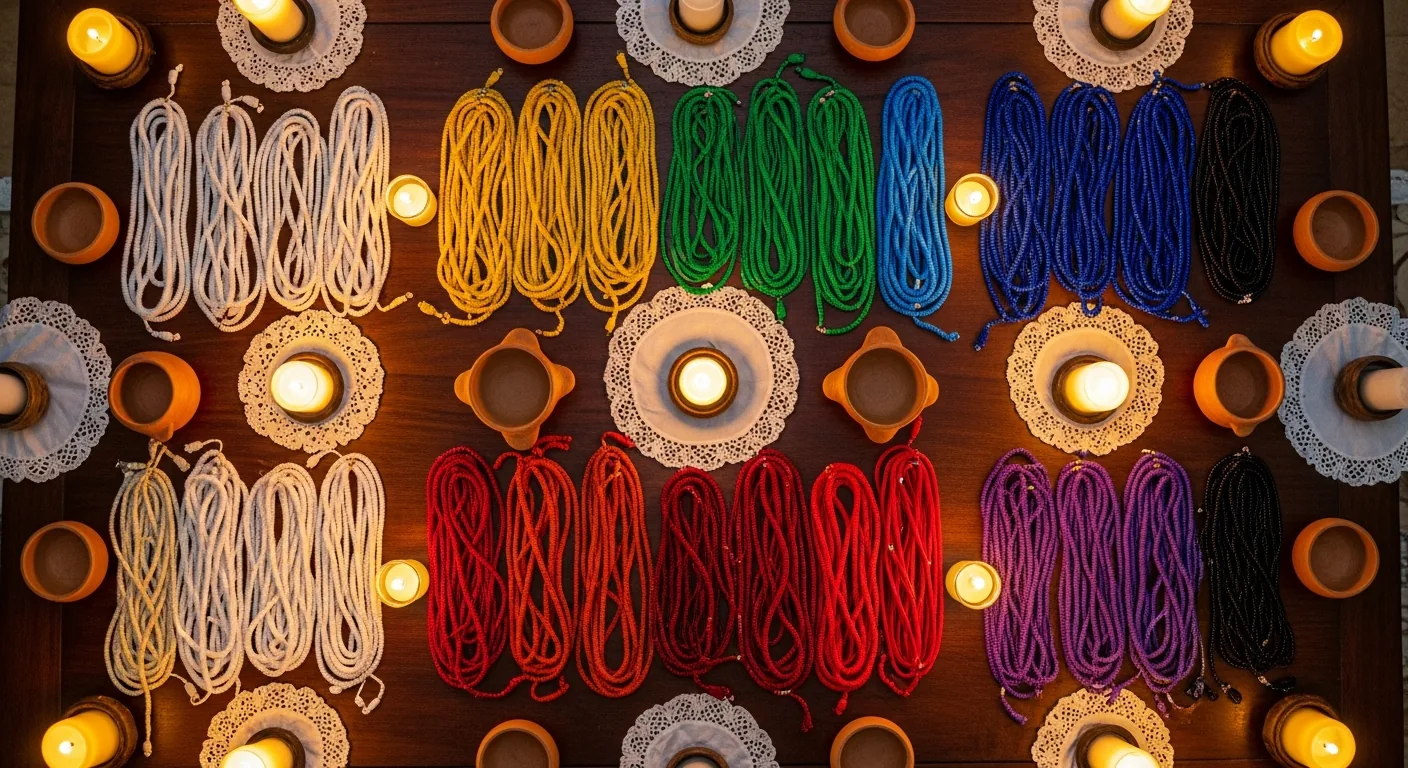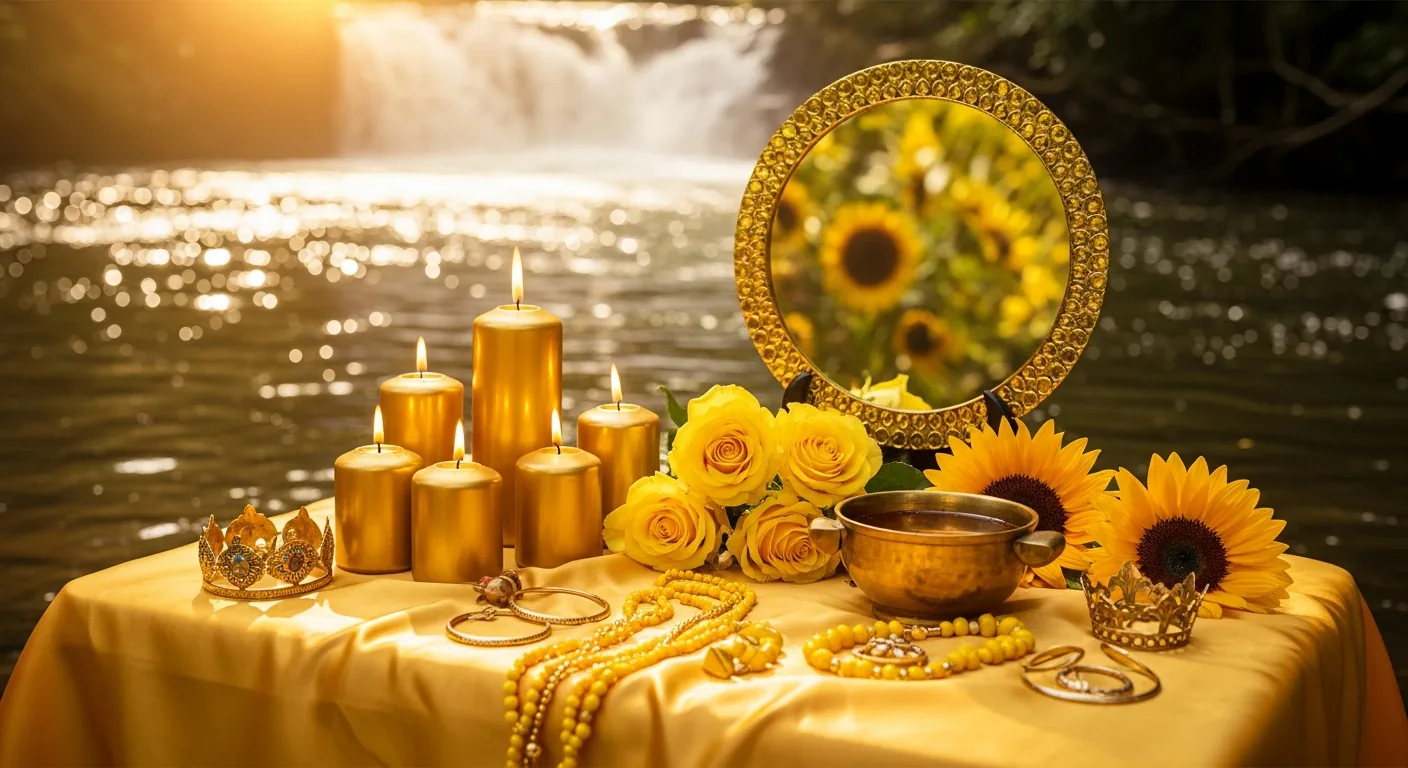
Those who begin to study the orixás soon discover that Oxum is not one. In Candomblé, the queen of the sweet waters manifests in various paths, and each of them is a quality of Oxum: the same orixá, with different temperaments, stories, and strengths. Some are young and warrior-like, others are old and deep like the bottom of the river.
In this guide, you understand what Oxum's qualities are, learn the main ones, find out why her number is 16 and, above all, why her quality is a foundation that only the terreiro can reveal.
What are Oxum's qualities
In Candomblé, especially in the ketu nation, each orixá has "qualities," also called caminhos. A quality is a specific form in which the orixá presents herself, with a proper name, temperament, offerings, and particular connections with other orixás. All continue to be Oxum, just as a person is the same in various phases of life.
There is an important difference in interpretation between Africa and Brazil. In the Yoruba tradition, these manifestations are understood as paths traveled by a single Oxum. In Brazil, each quality began to be treated, in the practice of the terreiros, almost like a distinct orixá, with its own worship.
If you are still getting to know the orixá, it is worth reading our guide on who Oxum is and the overview of what the orixás are first.
Ora yê yê ô! Traditional greeting to Oxum, which means, in a tone of praise, "mother of mothers." This is how the children call the lady of the fresh waters.
Oxum is one, but has many paths
Here lies a common confusion, and it is worth separating carefully. In umbanda, Oxum is usually spoken of as a single spirit, associated with "lines" or vibrations of work; how each author and each house situates the orixá is in Oxum in umbanda. In candomblé, one speaks of qualities, which are liturgical foundation, linked to the assentamento, the leaves, and the chants of each path.
They are distinct traditions, and each has its own logic. Treating the two as equal erases the specificity of each religion. In the Angola nation, for example, the energy of fresh waters appears with other names and nkisis, such as Kisimbi, with its own worship and chants.
The sacred number of Oxum is 16, and therefore many houses speak of 16 qualities. But the spellings and lists change from terreiro to terreiro, and there is no single, definitive table valid for everyone.
The main qualities of Oxum
Below are some of the most cited qualities in Brazilian terreiros. Read this as an introduction, and not as a closed truth: each house keeps its own tradition.
- Oxum Opará (or Apará): the youngest and most warrior-like. She walks alongside Ogum, carries a sword, and is known as the Lady of the Sword. She usually wears shades of brownish red.
- Yeye Ipondá (or Pondá): also a warrior, queen of the city of Ìponda. She walks with Oxaguiã and with Oxóssi, and is remembered as the mother of Logun Edé.
- Ibu Abotô: one of the oldest. She lives in deep waters, is calm, wise, and reserved, linked to motherhood and welcoming.
- Oxum Kare: linked to the waters near the forest and to the energy of Oxóssi, she joins the abundance of the waters with hunting.
- Ijimu: one of the oldest and deepest, of serious and reserved temperament, guardian of the river's secrets.
Other qualities appear depending on the nation and the house, such as Yeye Oke, Miwa, and Adofè. The complete list is part of the internal knowledge of each terreiro.
New and old qualities
A teaching is repeated in many houses: the younger qualities of Oxum live in shallow and superficial waters, and tend to be more warrior-like, fast, and ardent. The older ones live in deep waters, and are more calm, wise, and reserved.
It is not a rigid rule, but rather an image that helps to understand the temperament of each path. The young Opará who wields the sword and the elderly Abotô who rests at the bottom of the river are the same Oxum, in different times and moods.
This diversity also appears in the way each quality receives its offerings and in the way of each child. To know the profile of those ruled by her, see our text about the children of Oxum, and for the colors of the orixá, the guide on colors of the orixás.
The foundation is from the terreiro
This is the most important point of the article, and the most honest. You do not discover your quality of Oxum through a text on the internet. The quality of the head orixá is a foundation revealed in the cowrie-shell divination, conducted by a babalorixá or an ialorixá inside the terreiro.
No list, test, or video replaces this ritual work. Public information, including that of this guide, serves for study and respect, not for self-diagnosis. Two serious houses may, even, name the same energy in different ways, and both will be correct within their foundation.
If this subject touched you, the best path is to seek a trusted house of axé, calmly and without haste. The orixá reveals itself at the right time, within the tradition, and not through the anxiety of knowing immediately.
Frequently asked questions
What are the qualities of Oxum?
They are the paths or avatars of the orixá in Candomblé, especially in the Ketu nation. Each quality has its own name, temperament, and offerings, but all continue to be the same Oxum. It is like the same person in different phases of life, younger and more of a warrior or older and wiser.
How many qualities of Oxum exist?
The sacred number of Oxum is 16, and many houses speak of 16 qualities. In practice, the spellings and the lists vary from terreiro to terreiro and from nation to nation. There is no single and definitive table: each house keeps its tradition and its foundation.
What is the difference between Oxum Opará and Oxum Ipondá?
Both are warrior qualities. Opará is the younger one, walks with Ogum and carries the sword, being called the Lady of the Sword. Ipondá is the queen of the city of Ìponda, walks with Oxaguiã and Oxóssi and is remembered as the mother of Logun Edé. Details vary according to the house.
How do I know which is my quality of Oxum?
Only through cowrie-shell divination (jogo de búzios), conducted by a babalorixá or ialorixá inside a terreiro. No internet test reveals this. Texts like this serve for study and respect for tradition, never for self-diagnosis of the head orixá.
Is Oxum quality the same as Oxum line in Umbanda?
No. Quality is a concept of Candomblé, linked to the consecrated foundation (assentamento), the leaves, and the chants of each path. In Umbanda, people speak of lines or vibrations of the ritual work of an Oxum understood as unique. They are distinct traditions, each with its own logic.
Where to find items for Oxum
If you worship Oxum and want to prepare a space of faith and respect, at Joia Mística Laroyê you will find:
- Yellow and golden candles: to light in praise to the orixá
- Statues and abebés of Oxum: the golden mirror, her symbol
- Herbs of Oxum: basil, lemon balm, and others for baths and amaci
- Honey, perfumes, and essences: for offerings and smoke cleansing (defumação)
- Bead necklaces and yellow beads: to compose your axé with care
Also check out our guide on offering for Oxum. Visit our shop in Extrema, Minas Gerais or talk to us via WhatsApp and we will ship nationwide.
Sources: Oxum (Wikipedia) and Oxum (Significados).
References
- Wikipedia: entry about Oxum, the orixá of fresh waters
- Significados: explanatory article about Oxum in Candomblé