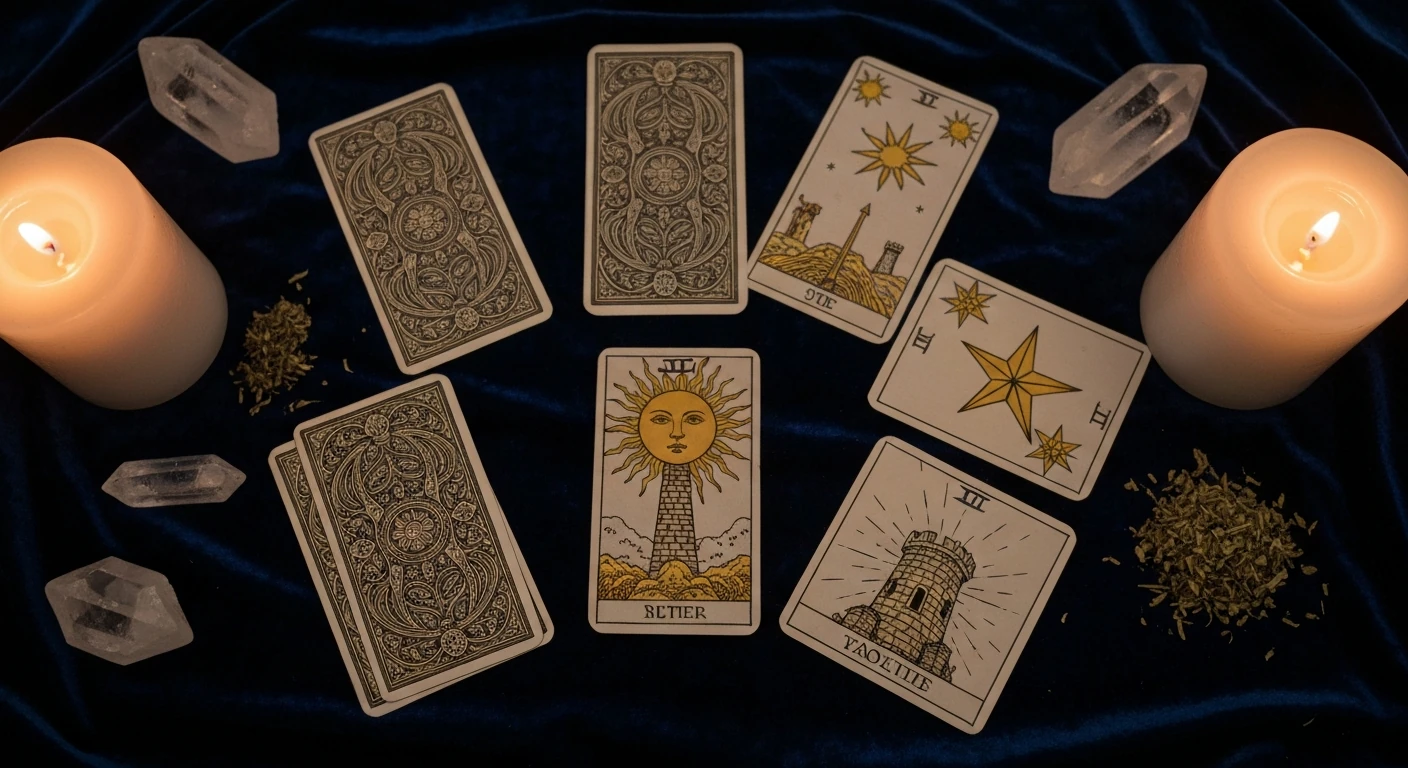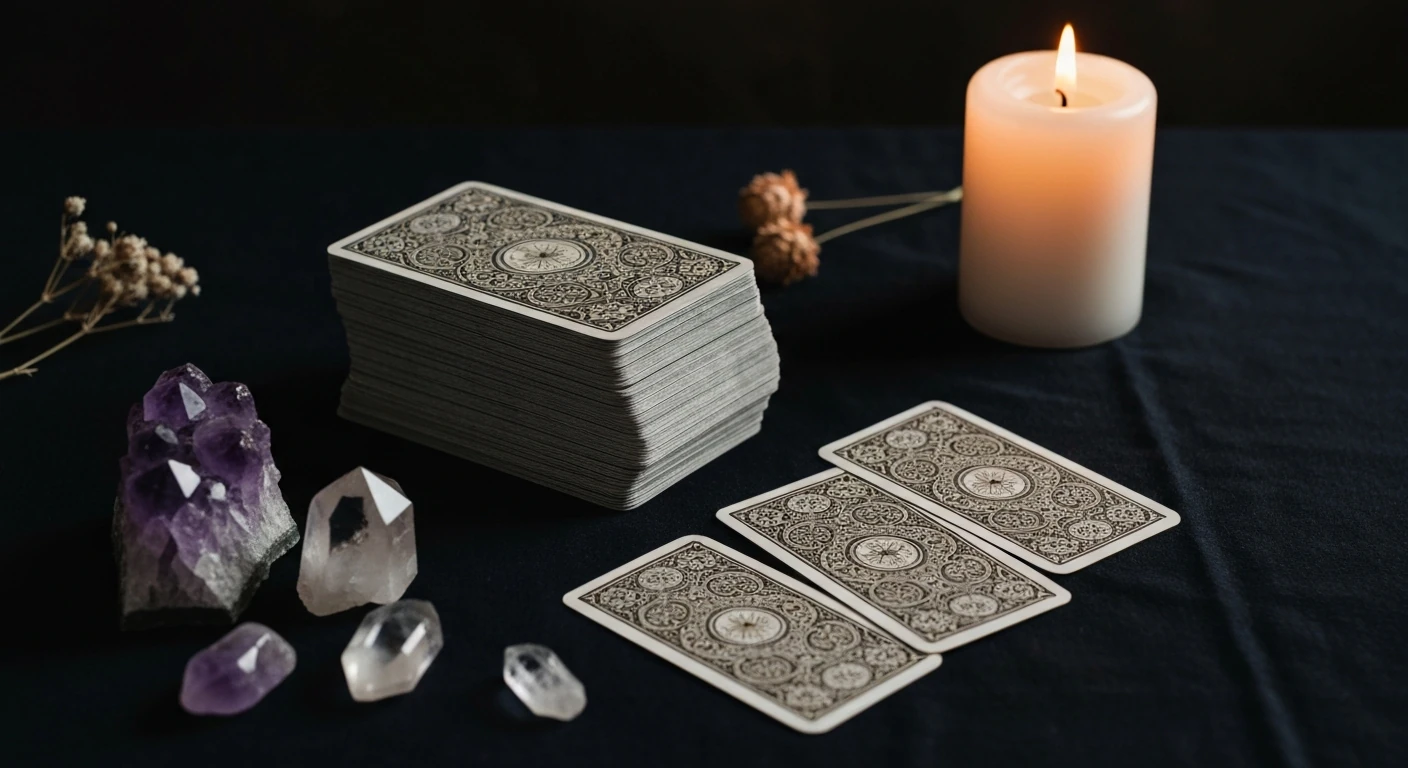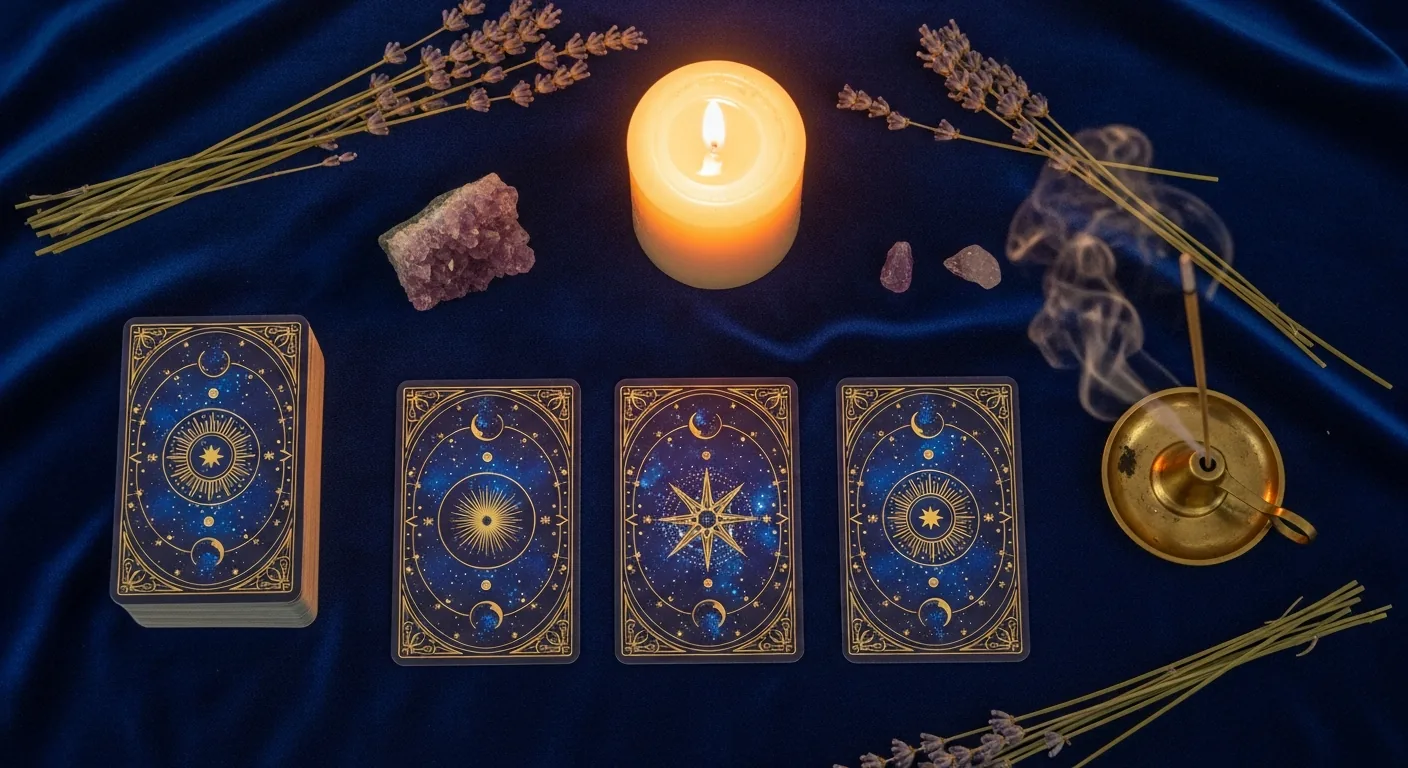
The 3-card spread is the most used reading by those starting in tarot, and also the most versatile. With just three cards laid side by side, you read the past that shaped an issue, the present that defines it, and the future that tends to form. It is simple to set up and powerful to interpret.
In this guide, you learn what the 3-card spread is, the meaning of each position, how to do the reading step by step, how to connect the three cards into a story, and the variations that expand the method. All with responsibility, treating tarot as a compass, not as a sentence.
What is the 3-card spread
The 3-card spread is a method in which you open three cards and read each one in a position of fixed meaning. The most well-known version follows the timeline: past, present, and future. It is the natural entry point of tarot, because it has enough depth to tell a story, without the density of larger spreads.
Compared to the Celtic Cross spread, which opens ten cards, the three-card spread is lean and fast. Compared to the Yes or No Tarot, it goes beyond the closed answer and shows the movement of the issue in time. Therefore, most tarot readers recommend mastering the three-card spread before moving on to complex methods.
Here we speak of European tarot, in the Rider-Waite-Smith or Marseille school. The deck has 78 cards, among 22 Major Arcana and 56 minor, as described in the entry about tarot. It is not to be confused with the tarot of the orixás, which is another oracle, of Afro-Brazilian matrix, with its own symbology and function.
The three positions: past, present, and future
Each card occupies a position, and the reading is born from the dialogue between them. In the classic method, the arrangement is from left to right:
| # | Position | What it reveals |
|---|---|---|
| 1 | Past | The roots of the matter, what has already happened and still influences the present |
| 2 | Present | The current situation, the core of what you are living now regarding the theme |
| 3 | Future | The tendency that forms if the situation follows the current path |
It is worth noting an important detail: the third card shows a probable future, not a closed destiny. It points to where the current energy is heading, and this direction changes when you act. The tarot describes tendencies of the present moment, and the present is always yours to transform.
How to do the reading step by step
You can use the full deck or, if you are starting, just the 22 Major Arcana to reduce friction. Follow the sequence calmly:
- Prepare the environment. Choose a quiet place, breathe deeply and silence the rush. The tarot asks for presence.
- Formulate an open question. Only one, clear and centered on you. "What do I need to understand about my professional life now?" works better than "will I be promoted?"
- Shuffle while concentrating on the question. Without rushing, visualizing the question while mixing the cards, until you feel it is enough.
- Cut the deck. Generally into three piles, regrouping in the order that intuition tells you.
- Take the three cards from the top and arrange them side by side, from left to right: past, present, and future.
- Observe the set before interpreting. Notice the colors, the Major Arcana, and the repetitions of suits.
- Read each position and, finally, connect the three into a single narrative.
Write the question on a piece of paper before shuffling. Fixing the question prevents it from changing along the path, a common error that makes the reading impossible to interpret later.
How to read the three cards as a story
The secret of the method is not in each isolated card, but in the narrative they form together. Read from left to right, like someone telling a short story in three acts.
Start with the past: ask what seed that card planted in the question. Move to the present: see how that root manifests now, in what you are living. Arrive at the future: understand where the energy moves if nothing changes. Notice the bridges between the cards, like a difficulty in the past that matures into a strength in the present.
Pay attention to repetitions and contrasts. Three cards of the same suit reinforce a theme, while a sharp turn in atmosphere between the positions says a lot about the movement of the question. To interpret each arcana card, have the meaning of the cards at hand: consult the guide of the 22 Major Arcana of the tarot and cross the meaning of the card with the meaning of the position in which it fell.
Variations of the 3 card spread
The beauty of the method is that the three positions can change meaning depending on your question. Besides the classic past, present, and future, reference guides like the Sumi Tarot describe other three card readings:
- Situation, action and result: great for practical daily decisions.
- Mind, body and spirit: a panorama of personal balance.
- You, the other and the relationship: clarity about an emotional or professional bond.
- Pros, cons, and advice: helps weigh a difficult choice.
- What I think, what I feel, and what I should do: aligns reason, emotion, and attitude.
Choose the axis before shuffling and maintain the meaning of the positions until the end. Changing the meaning in the middle of the reading confuses the interpretation and takes away the strength of the method.
Common errors and precautions in the reading
Almost every beginner trips over the same points, and knowing them saves a lot of frustration:
- Vague question. A confused question returns a confused answer. Formulate a single, clear, and open question.
- Repeating the same question. If the answer was not pleasing, redoing the spread immediately only scrambles the reading. Let the question breathe.
- Mixing themes. Love, work, and health in the same spread interfere with each other. Do one at a time.
- Forced reversed cards. Reversed cards are an optional resource. Those who are starting can read everything in the normal position and adopt reversals later.
A reminder of responsibility applies to any method. Tarot is a compass, not a decree of destiny: it points to present trends, and the present changes when you choose. In matters of health, money, or legal issues, the reading guides your reflection, but it does not replace a doctor, psychologist, or lawyer. You can find more content in the blog tarot hub.
Frequently asked questions
How to do a 3-card spread step by step?
Prepare a quiet environment, formulate an open question, and shuffle while concentrating on the issue. Cut the deck, take three cards, and arrange them from left to right: past, present, and future. Read each position and, at the end, link the three into a single narrative that answers your question.
What do the past, present, and future positions mean?
The first card shows the roots of the issue, what has already happened and still influences. The second reveals the current situation, the core of what you are living now. The third points to the tendency that forms if nothing changes. Together, they tell the story of the issue in time.
How to formulate the right question for the tarot?
Ask only one question, clear and open, centered on you as the agent. Prefer "what do I need to understand about this relationship?" over "will he come back?". Open questions invite reflection and yield richer readings, while yes or no questions close the oracle in a dry answer.
Do I need to use reversed cards as a beginner?
No. Reversed cards are an optional resource. Those who are starting can read all cards in the normal position and focus on memorizing the basic meanings. When you feel confident, adopt the reversals gradually, as they add nuances to the reading, but they are not mandatory.
What are the variations of the 3 card spread?
Besides past, present, and future, you can use situation, action, and result; mind, body, and spirit; you, the other, and the relationship; pros, cons, and advice; or what I think, feel, and must do. Choose the axis before shuffling and maintain the meaning of the positions until the end.
Where to buy your tarot deck
At Joia Mística Laroyê, you find everything to start your practice with responsibility:
- Tarot decks: Rider-Waite, Marseille editions, and versions for beginners, with a meaning guide
- Towels and cloths for the spread: to cover the table and arrange the three cards
- Bags and boxes for the deck: care and respect for your cards
- Candles and incense: to prepare the reading environment
- Crystals and complementary oracles: for those who want to expand the practice
Visit our shop in Extrema-MG and we ship all over Brazil. If you prefer a guided reading, we also offer tarot consultation with personalized guidance.
References
- Wikipedia: entry on tarot, history and structure of the deck
- Sumi Tarot: guide to variations of the three card spread