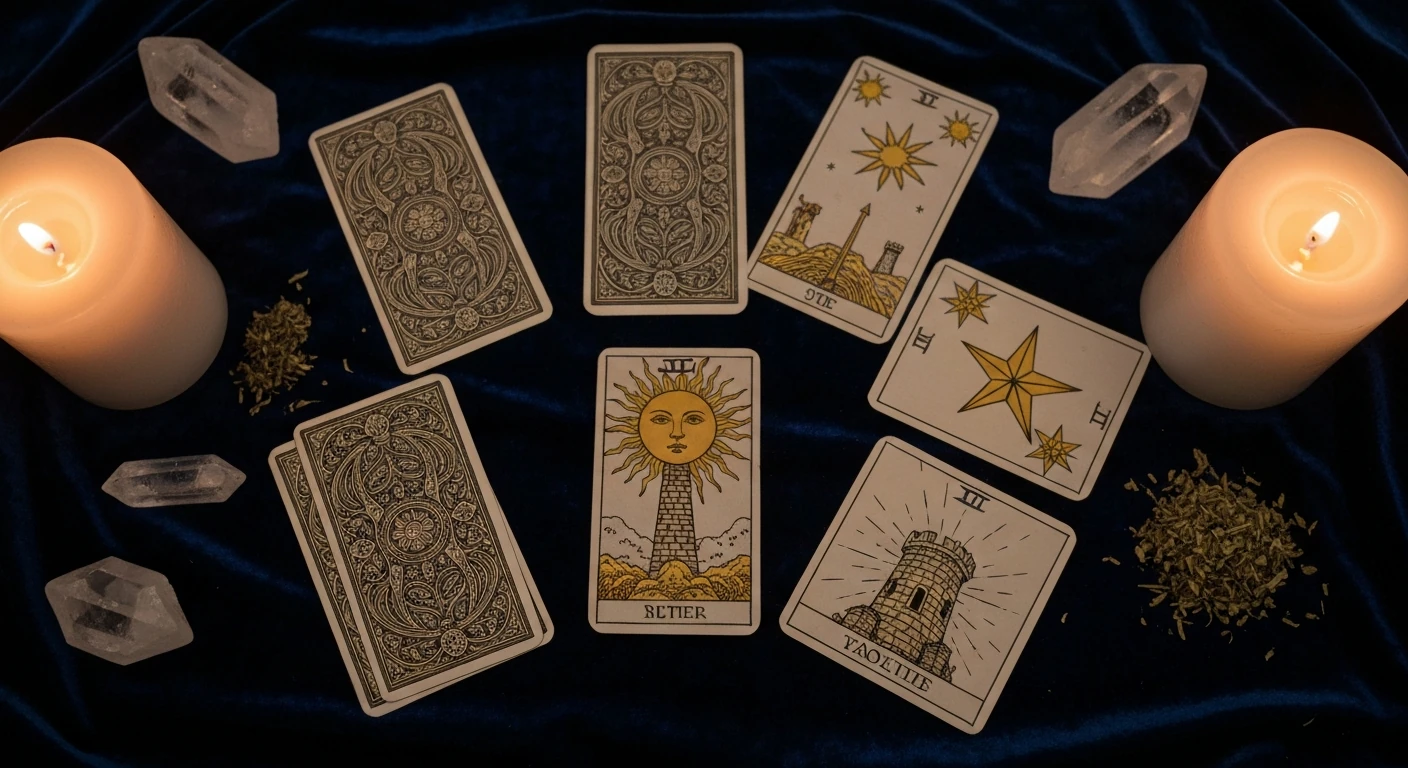
The yes or no tarot is the most direct way to consult the cards: you ask a closed question, draw an arcana card, and read the tendency of the yes, no, or maybe energy. It is simple to learn, but it requires two things that almost no one teaches correctly: formulating the right question and understanding that the card points to a path, it does not set a destiny.
In this guide, you learn how to do the spread step by step, how to build questions that actually work, which cards tend to answer yes, no, or maybe, and how to use the oracle responsibly without becoming a hostage to the cards.
What is the yes or no tarot
This method is an objective spread, designed for questions that allow a closed answer: "is it beneficial for me to accept this proposal?", "is it worth insisting on this conversation now?". Instead of opening a complete map of the situation, you ask the deck for a quick direction regarding one decision at a time.
In most schools, the reading uses the 22 Major Arcana, the most symbolic cards of the deck, from The Fool (0) to The World (XXI). Each arcana card carries an energy: some pull toward yes, others toward no, and some stay in the field of maybe. The answer arises from this energetic tendency, not from a fixed sentence stamped on the card.
It is important to separate this method from the tarot of the orixás (orishas), which is another oracle, African-rooted and Brazilian, with its own symbology and function. If that is your interest, it is worth reading the Tarot of the Orixás guide; here we deal with traditional European tarot (Marseille or Rider-Waite) applied to the yes or no question.
How to formulate the right question
The question is 80% of the reading. A confusing question returns a confusing answer, and the fault is not with the deck. Three rules solve almost everything:
- One decision at a time. No "should I change jobs, break up with my partner, and move cities?". Ask only one thing.
- Formulate in the positive. Avoid negation, which confuses the reading. Instead of "will I get sick?", ask "is my health in balance at this moment?"
- Center the question on yourself. Tarot reads your energy, not the heads of others. Instead of "will he come back?", prefer "is it beneficial for me to open space for a return?"
See the difference in practice:
| Fragile question | Well formulated question |
|---|---|
| Will everything go wrong? | Am I on the right path for this goal? |
| Does she like me? | Is it healthy for me to invest in this relationship now? |
| Should I accept or refuse? | Is it beneficial for me to accept this proposal? |
Tip: write the question on a piece of paper or say it out loud before shuffling. Fixing the question prevents it from changing in the middle of the path, a common mistake that makes the answer impossible to interpret.
How to do the reading step by step
The tarot yes or no reading is fast. Reserve a few minutes without rushing and follow the sequence:
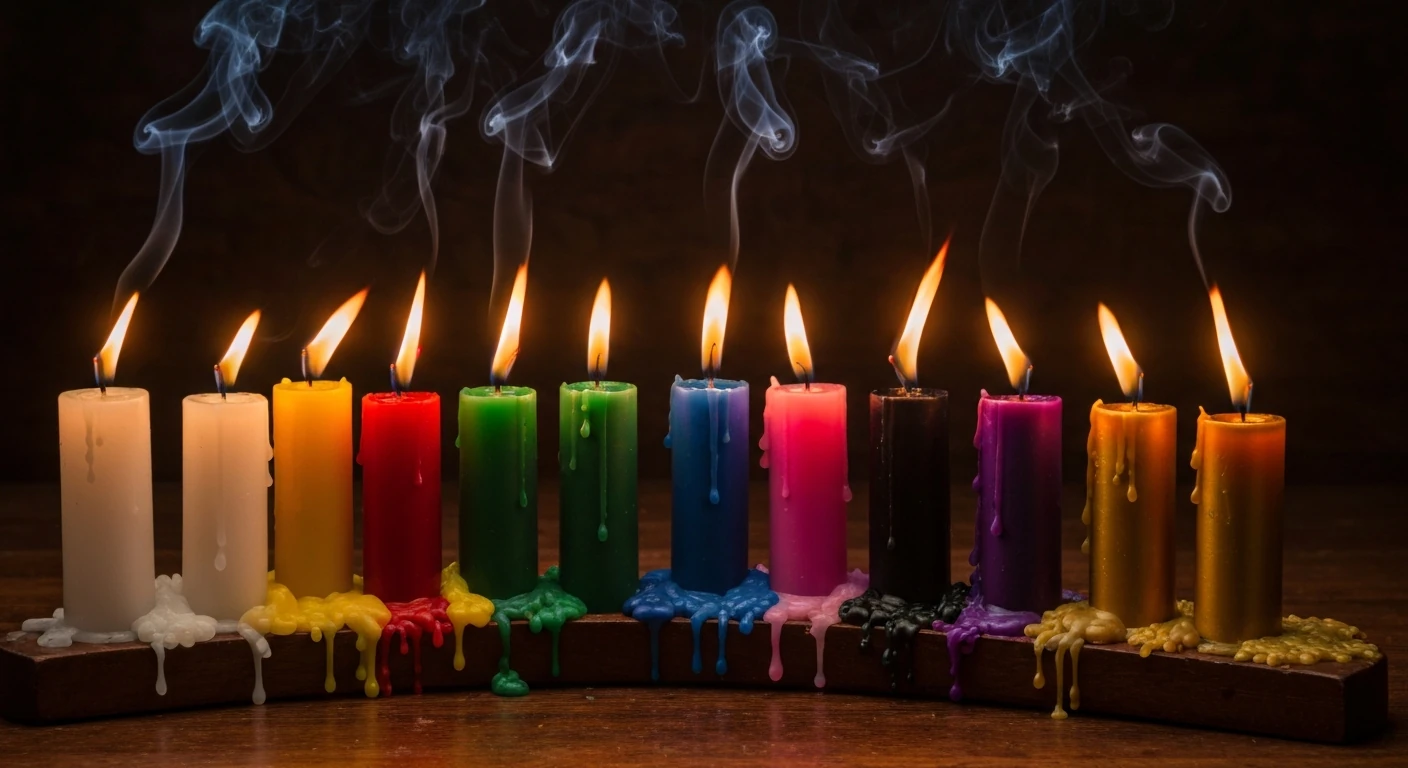
- Prepare the environment. A quiet corner, without interruptions, is enough. Lighting a candle or incense helps to concentrate and is optional, not mandatory. If you want to understand the role of colors, see the meaning of ritual candles.
- Fix the question. Say it out loud or write it down, exactly as you formulated it.
- Shuffle while visualizing the issue, without rushing, until you feel it is enough.
- Cut the deck with your left hand, usually into three piles, and regroup them in the order your intuition tells you.
- Spread the cards in a fan, face down, and choose the one that catches your attention the most or simply visualize a number from 1 to 22.
- Turn the card over and observe the tendency: the energy of the arcana card points to yes, no, or maybe.
You can work with a single card (direct answer) or with three cards, reading the combination to gain useful nuance when the theme is delicate and you want to confirm the direction instead of a dry answer.
Which cards indicate yes, no, or maybe
Here lies the part that many guides get wrong: the classification of the arcana cards varies according to the author and the deck. There is no official and definitive table. What exists are consensus cores, cards whose energy is so marked that almost every school agrees, and border cards, which change sides according to the tradition.
YES Tendency (opening energy, realization, strength):
- The Sun the most luminous card in the deck, almost unconditional yes
- The Star hope, favorable flow
- The Magician you have the resources to realize
- The Empress fertility, abundance
- Strength yes, with courage and self-control
- The Chariot advancement, victory through movement
NO Tendency (blocking energy, rupture, illusion):
- The Tower rupture, it is not the time
- Death closing of a cycle, not in the way you want
- The Hanged Man pause, suspension, waiting
- The Devil attachment, trap, not healthy
- The Moon illusion and uncertainty; the ground is not clear
Tendency of MAYBE (transition energy, open choice):
- The Lovers there is a choice to make; draw again with a more specific question
- The High Priestess something not yet revealed; wait
- Judgement depends on a turn that is in progress
- Justice depends on your own actions and what is just
Attention: cards such as The World, Justice, The Hermit and The Fool change classification depending on the school; for some tarot readers The World is a yes of full realization; for others, a "wait, the cycle is not yet closed." Read the image and the context of your question: they are worth more than any table label.
If you want to deepen the symbolism of each Arcana before classifying, the reference of meaning of the 22 Major Arcana of Personare is a good starting point.
Reversed cards: an optional layer
When a card appears upside down, its energy tends to weaken or invert. A yes can turn into "yes, but with obstacles"; a reversed no can indicate a blockage that is dissipating. The reversed card is not automatically bad often speaks of delayed, internalized, or still forming energy.
An honest caveat: many schools do not use reversed cards in yes or no readings, especially those who visualize a number from 1 to 22. Treat reversed cards as an extra layer for those who already read with them, not as an obligation. If you are starting, you can read only the cards in the upright position with no loss at all.
When yes or no is not enough
Tarot is a compass, not an oracle of a closed destiny. It points to the energy trend in the present moment and the present changes when you act. Therefore, some precautions protect you from turning the reading into a source of anxiety:
- Do not repeat the same question in the same session. Insisting forces a response and muddies the reading. If the situation truly changes, days later, then it makes sense to ask again.
- When yes/no does not resolve, change the question. Instead of "will it work?", ask "what can I do to make this work?". The card becomes advice, not a verdict.
- For health, money, and legal issues, the card guides your emotional state regarding the theme; it does not replace a doctor, lawyer, or good planning.
Used this way, with clarity and responsibility, tarot stops being a crutch and becomes what it always was: a tool for self-knowledge. To understand the general principles of any spread, Astrolink gathers a good overview in how to do a tarot spread, and you can find more content in the blog's tarot hub.
Frequently asked questions
How does yes or no tarot work?
The reading uses the Major Arcana: you formulate a closed question, shuffle while visualizing it, and draw one to three cards. Each Arcana has a yes, no, or maybe energy trend, and the answer arises from that direction, read together with the context of the question.
How to ask a question for yes or no tarot?
Make a short and clear question, about one decision at a time, formulated in the positive and centered on you. Replace "will he come back?" with "is it beneficial for me to open space for a return?". The more specific, the more precise the pointed trend will be.
How many cards to use in yes or no tarot?
One to three. One card gives the direct answer; three cards give nuance, showing the energy surrounding the decision and confirming the tendency. For beginners, starting with one card per question is the cleanest path.
Can you ask the same thing twice to the tarot?
Not in the same session. Repeating the question tries to force the desired answer and muddies the reading. If the situation really changed days later, with new elements, then it is reasonable to consult again on the same theme.
Does yes or no tarot even work?
It works as guidance for the present moment, not as a guaranteed prediction of the future. The quality of the answer depends on the clarity of the question and your openness. The cards indicate tendencies; the decisions continue to be yours.
Where to buy your tarot deck
At Joia Mística Laroyê, you find everything to start your practice with responsibility:
- Tarot decks Marseille, Rider-Waite and editions for beginners, with a guide of meanings
- Tarot of the orixás and Afro-Brazilian oracles for those who want the Afro-Brazilian oracle
- Candles and incense to prepare the reading environment
- Towels and spreading cloths to cover the table and protect the cards
- Bags and boxes to keep the deck with care and respect for your tarot
Visit our shop in Extrema, Minas Gerais or talk to us via WhatsApp and we ship all over Brazil. If you prefer a guided reading, we also offer tarot consultation with personalized guidance.
References
- Personare: meaning of the 22 Major Arcana of the tarot
- Astrolink: how to do a tarot reading